How to protect your basement from water damage in Pensacola
Pensacola's 60+ inches of rain and sandy coastal soil make basements vulnerable. Here's how to keep yours dry, what it costs, and when to call us.
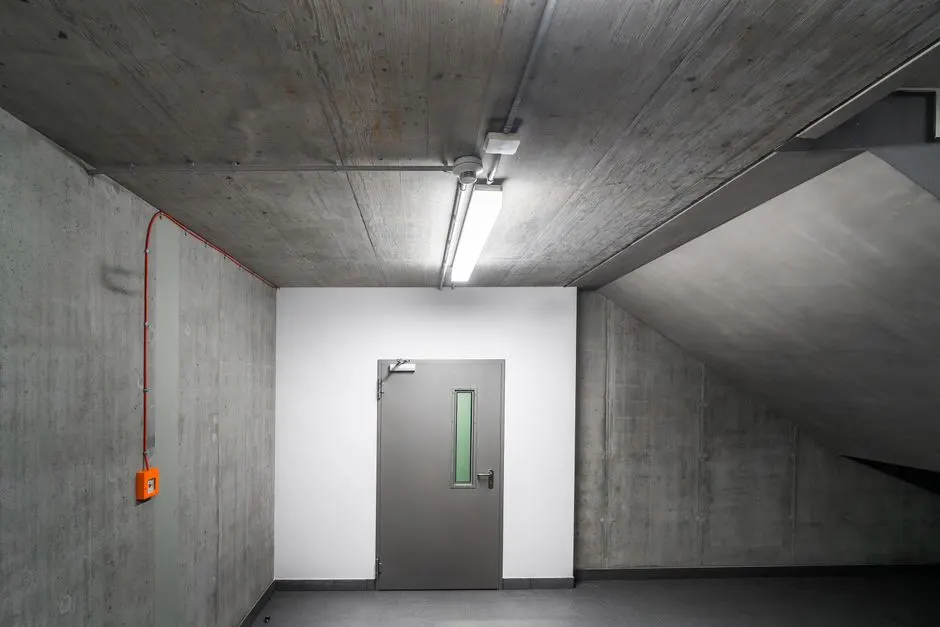
Protecting your basement from water damage in Pensacola means managing four things at once: roof and gutter runoff, the grading around your foundation, the water table under your slab, and the humidity that never leaves. Do those four well and your basement stays dry through a 60-inch rain year. Skip one and you will be pulling wet boxes out of a Pensacola basement after the next tropical system.
We have dried out basements from East Hill to Bellview, and the failures repeat. Below is what causes basement water damage in Pensacola, the fixes that work, what they cost in 2026, and when it is time to hand the job to a crew with pumps and meters.
Why Pensacola basements flood so easily
Pensacola basements flood easily because the city sits on sandy coastal soil over a shallow water table, and it receives roughly 62 to 66 inches of rain per year - more than Seattle. When the ground is already saturated, the next inch of rain has nowhere to go but against your foundation wall.
Three local factors make it worse than in most Florida cities:
- Storm surge and tidal influence. Properties near Bayou Texar, Bayou Chico, and the downtown waterfront can see groundwater rise within hours of a hurricane or a strong southerly squall line.
- Aging clay and cast-iron drain lines. In older neighborhoods like North Hill and East Hill, the original foundation drains and sewer laterals are 60 to 90 years old. They crack, root-infiltrate, and back up.
- Flat lots with short setbacks. Water that leaves your downspout 18 inches from the wall lands on your neighbor's grade and comes right back.
Because of that, a Pensacola basement is less a storage room and more a sump that needs active management.
What causes basement water damage in Pensacola?
Basement water damage in Pensacola comes from five sources, and identifying which one you have is the difference between a $400 fix and a $14,000 repair. The five are: surface runoff, foundation wall seepage, hydrostatic pressure from below, plumbing or sewer failure, and condensation.
Surface runoff and poor grading
If water appears along the top of the wall after a hard rain and dries within a day, it is surface water. The soil around your foundation should slope away at roughly 6 inches of drop over the first 10 feet. In Pensacola's sandy soil, that grade erodes fast, especially under a downspout that dumps directly at the wall.
Foundation wall seepage
Water that shows up as a damp patch or white chalky efflorescence midway down the wall is seeping through the concrete or block itself. Block foundations - common in pre-1960 Pensacola homes - leak at the mortar joints first.
Hydrostatic pressure
Water that pushes up through the floor slab, or that pools in a floor crack during a multi-day rain, is hydrostatic. This is the one you cannot fix with a tube of hydraulic cement. It needs a drainage system under the slab.
Plumbing and sewer failure
A failed water heater, a burst supply line behind a finished wall, or a backed-up sewer lateral will put water in a basement faster than any storm. If the water smells like sewage, stop and call us - that is a contaminated category 3 loss and it needs a different cleanup protocol than rainwater.
Condensation
Pensacola's summer dew points sit in the mid-70s. A cool basement floor will sweat. If your "leak" only appears in July and August and there is no rain involved, you have a humidity problem, not a leak.
The exterior fixes that stop most Pensacola basement leaks
Exterior water management is the cheapest, highest-return work you can do, and it should come before any interior waterproofing. We start every assessment outside.
- Extend downspouts 6 to 10 feet from the foundation. A $15 splash block or a buried extension line solves a surprising number of Pensacola basement flooding complaints.
- Clean gutters twice a year - March and October. Pensacola's pine and oak canopy fills a gutter in one season. A clogged gutter dumps 50 gallons of water per minute at the corner of your foundation.
- Re-grade the first 10 feet. Add compacted fill so the soil drops 6 inches away from the wall. Do not let mulch pile up above the siding line.
- Repair foundation cracks from the outside where you can reach them. A polyurethane injection from inside works, but exterior membrane repair plus proper drainage lasts longer.
- Install a French drain or curtain drain on the uphill side. If your lot slopes toward the house, this is mandatory, not optional.
If your basement has already taken on water, our basement water damage repair in Florida crews handle the extraction, the drying, and the repair in one visit instead of three separate contractors.
Interior waterproofing and drainage that actually works
Interior systems handle what exterior grading cannot: hydrostatic pressure and groundwater that rises under the slab. The standard setup for a Pensacola basement is an interior perimeter drain, a sump pit with a primary and battery-backup pump, and a vapor barrier or dehumidifier to control humidity.
Interior perimeter drain
A 4-inch perforated pipe set in washed gravel inside the footing, covered with concrete, routes wall and under-slab water to the sump. Expect $3,000 to $7,500 for a typical 1,000-square-foot Pensacola basement, depending on whether the slab has to be cut and how much pipe run you need.
Sump pump and backup
One pump is not enough here. During Hurricane Sally in 2020, we saw neighborhoods lose power for days. A battery backup or a water-powered backup pump keeps the pit empty when the grid is down. Budget $400 to $900 for a quality primary pump installed, and $350 to $800 for a battery backup.
Dehumidification
A 70-pint standalone dehumidifier draws about 7 amps and will hold a 1,000-square-foot basement at 50% relative humidity for roughly $40 to $60 a month in electricity. That is cheaper than replacing a mold-damaged finished wall. Our structural drying Florida team uses commercial LGR units that pull 3 to 5 times that volume when a basement is already wet.
How much does basement waterproofing cost in Pensacola?
Typical 2026 pricing in Pensacola runs $2,500 to $9,000 for a full interior waterproofing system, $1,200 to $4,000 for crack injection and spot repairs, and $8,000 to $22,000 for exterior excavation and membrane work on a full foundation. Emergency water removal after a flood is a separate line item, usually $1,800 to $6,500 depending on how much water and how much of the basement is finished.
What drives the number up:
- Finished walls and flooring that have to come out before we can dry the framing.
- Crawl space or basement access too narrow for equipment, which means hand-carrying debris.
- Contaminated water - sewage or storm surge - which requires antimicrobial treatment and disposal.
- Multiple sump pits or a long perimeter run over 150 linear feet.
What keeps it down: catching the problem before the drywall is wet. A $300 grading fix in October beats a $9,000 restoration in June.
What to watch out for
The most common mistakes we see homeowners make are cheap fixes that hide the problem instead of solving it. Watch for these:
- Painting the wall with waterproof masonry paint. It traps moisture inside the block and the paint blisters off within two seasons.
- Hydraulic cement on an active crack. It sets hard and cracks again the next time the wall moves.
- Running a single sump pump with no backup. The storm that floods your basement is the same storm that knocks out your power.
- Ignoring a musty smell. Mold colonizes wet drywall in 24 to 48 hours. If it smells like a wet basement, it is one.
- Assuming your insurance covers it. Standard homeowners policies exclude groundwater and surface flooding. You need a separate flood policy through the NFIP or a private carrier, and those have a 30-day waiting period.
One more: do not store cardboard boxes, paper, or electronics directly on a Pensacola basement floor. Use plastic bins on 4-inch risers. It costs $60 and saves thousands.
When to call a professional
Call a professional the moment water is more than a damp spot, or the moment you cannot identify the source within an hour. Standing water, sewage odor, water wicking up drywall, or a sump pump that runs continuously all mean the same thing: the problem is bigger than a shop vac.
At Water Damage Pros, we start with moisture mapping - thermal imaging and pin meters - so we know exactly how far the water traveled before we cut anything. Then we extract, dry, and repair. If you are also dealing with a storm-driven loss, our storm damage restoration in Florida team can handle the roof, the basement, and the documentation for your claim in one project.
We also work across the wider region, and the same coastal groundwater problems show up in water damage restoration in Pensacola, Florida calls every week - from a flooded finished basement near Cordova Mall to a crawl space full of storm surge in Gulf Breeze.
Frequently Asked Questions
How do I protect my basement from water damage in Pensacola?
Extend downspouts 6 to 10 feet from the wall, re-grade the first 10 feet so soil drops 6 inches, clean gutters twice a year, and install an interior perimeter drain with a sump pump plus battery backup. Those four steps handle 90% of Pensacola basement flooding.
What causes basement water damage in Pensacola?
Surface runoff from poor grading, foundation wall seepage through block or concrete, hydrostatic pressure from a shallow water table, failed plumbing or sewer laterals, and summer condensation. Pensacola's 62-plus inches of annual rain and sandy coastal soil make all five common here.
Does insurance cover basement water damage in Pensacola?
Standard homeowners policies cover sudden plumbing failures like a burst supply line, but they exclude groundwater, surface flooding, and storm surge. You need a separate flood policy, and it carries a 30-day waiting period before coverage starts. Document everything with photos before you move a single item.
How much does basement waterproofing cost in Pensacola?
In 2026, expect $2,500 to $9,000 for a full interior system, $1,200 to $4,000 for crack injection and spot repairs, and $8,000 to $22,000 for exterior excavation and membrane work. Emergency water removal runs $1,800 to $6,500 depending on water volume and finish level.
Who should I call for basement water damage in Pensacola?
Call a licensed water damage restoration company that handles extraction, drying, and repair in-house. Water Damage Pros responds 24/7 across Pensacola and can be reached at 0001112222. If the water smells like sewage, tell the dispatcher immediately - that changes the cleanup protocol.
Get help with water damage in Pensacola
If your basement is wet right now, every hour counts - mold starts in 24 to 48 hours and the repair bill climbs with it. Call Water Damage Pros at 0001112222 and we will be on our way with extraction equipment, drying gear, and moisture meters.